
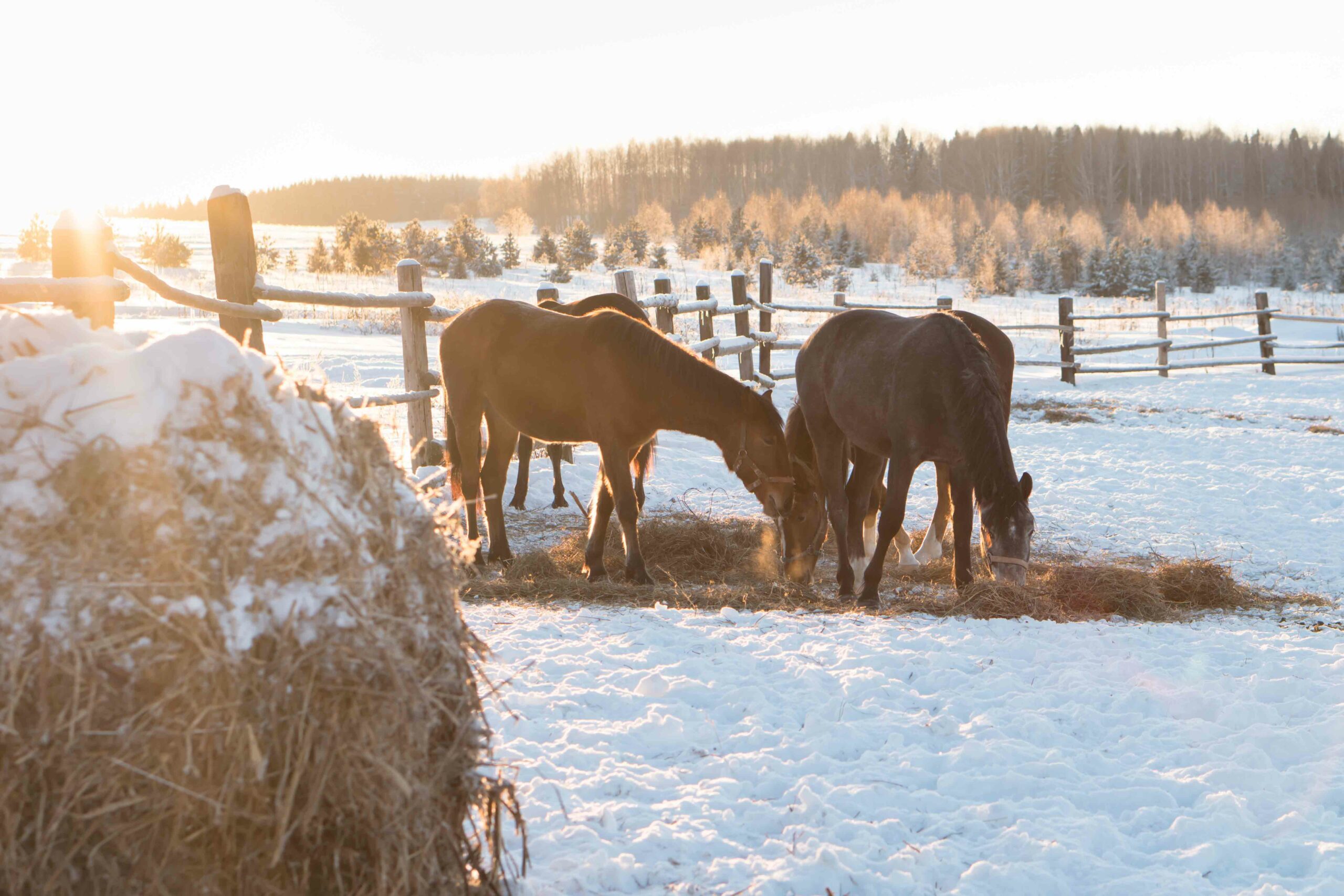
As temperatures drop and snow covers the pastures, horse owners across Litchfield County begin asking an important question: Is my horse’s winter diet doing enough? From hay quality to grain balance and body condition scoring, the winter months demand closer attention to your horse’s nutritional needs. Without access to fresh pasture and with increased energy requirements to stay warm, horses rely entirely on what we provide to maintain their health and weight.
Whether you’re caring for a seasoned trail companion, a young performance horse, or a retired senior, understanding how to fine-tune your horse’s winter feeding program is key. Let’s explore how hay, grain, and regular body condition checks can help keep your horse in peak condition until spring arrives.
Why Winter Feeding Requires a Closer Look
Winter affects more than just a horse’s comfort level. Cold weather increases a horse’s caloric needs, especially when temperatures dip below 45°F. Horses burn more energy to stay warm, and that energy has to come from somewhere, primarily their diet.
Access to grass is also limited or non-existent during winter, which means your horse relies entirely on stored forage and feed. Even horses that hold weight well in summer can start to drop pounds if their winter diet isn’t adjusted. That’s where hay and grain come into play.
Hay: The Foundation of Winter Nutrition
Hay is the cornerstone of winter horse diets. In fact, it’s not just a filler. It’s the main fuel source for your horse when pasture is unavailable. But not all hay is created equal, and its nutritional value can vary based on when and how it was harvested.
How much hay should a horse eat in winter?
Horses generally need 1.5% to 2.5% of their body weight in forage daily, which translates to 15 to 25 pounds of hay for a 1,000-pound horse.
Why quality matters:
Low-quality or overly mature hay lacks the nutrients and digestibility your horse needs to maintain condition in cold months. You want hay that’s free of mold, dust, and weeds, with a good balance of fiber and protein.
Storage tip:
Keep hay dry and off the ground to prevent spoilage. Moldy hay can cause respiratory issues and digestive upsets, which are even more dangerous in the winter.
Watch for winter colic:
Impaction colic can be more common during colder months due to lower water intake and increased dry forage. Be sure your horse has access to fresh, unfrozen water at all times.
Should You Add Grain?
While hay meets the needs of many horses, some may require extra calories in the form of grain or concentrate feeds, especially:
- Seniors and hard keepers
- Working horses
- Horses exposed to extreme cold
- Horses recovering from illness or injury
When grain helps:
Grain can provide the additional calories and nutrients your horse needs to maintain weight. Oats, corn, and commercial pelleted feeds are commonly used, but feeding the right type and amount matters. Too much grain or sudden changes can upset the digestive system and increase the risk of colic or laminitis.
Balance is key:
Always feed grain as a supplement to a forage-based diet. Never let grain replace hay. And be sure to follow manufacturer guidelines or consult your veterinarian for feeding rates.
Body Condition Scoring: Your Best Winter Tool
Fluffy winter coats can hide weight loss surprisingly well. That’s why body condition scoring is such an important tool during the colder months.
What is body condition scoring (BCS)?
It’s a simple, hands-on way to evaluate your horse’s fat cover. The Henneke scale rates horses from 1 (poor) to 9 (obese), with an ideal score typically between 4 and 6, depending on breed and workload.
What to check monthly:
- Ribs: Can you feel them easily without seeing them?
- Spine and withers: Do they feel sharp or padded?
- Hips and tailhead: Is there muscle loss or fat?
- Neck: Is it too thick or too thin?
Changes in body condition are often the first sign that something in the diet isn’t quite right. Catching small changes early can prevent big problems later.
Special Considerations for Seniors and Hard Keepers
Older horses often have a harder time holding weight during winter. Aging can reduce the efficiency of digestion and make it harder for them to extract nutrients from hay.
Watch for these signs:
- More visible ribs or hip bones
- Longer eating times
- Dropping feed or quidding
- Dull coat or decreased energy
In these cases, adding senior feeds, soaked beet pulp, or high-fat supplements can help. Soaked hay cubes or chopped forage can also be easier to chew and digest. Our Litchfield large animal veterinarian can help tailor a feeding plan that supports your senior horse’s needs.
Support from Your Veterinary Team
Feeding horses in winter is part science, part art, and a little bit of trial and error. But you’re not alone. Regular checkups with your horse veterinarian can help you make sure your winter feeding program is truly meeting your horse’s needs.
Here are a few ways your veterinary team can support you:
- Teeth checks: Dental issues can make it hard for horses to chew hay or grain
- Fecal testing: Rule out parasites that could cause weight loss
- Body condition assessments: Hands-on evaluations help catch issues early
- Nutrition consults: Get professional input on feeding strategies and product choices
Shop Winter Nutrition Products Online
Need to stock up on supplements, senior feeds, or hay balancers? Visit our online store to browse trusted equine nutrition products approved by our veterinary team. Whether you’re looking for weight gain support or digestive health products, we’re here to help you find the right options for your horse.
Keep Your Horse Healthy All Winter Long
A balanced winter diet is about more than just calories. It’s about providing the right hay, evaluating grain needs carefully, and regularly checking your horse’s body condition. With a few smart strategies and the support of your Litchfield large animal veterinary team, you can help your horse thrive all season long.
If you have questions about your horse’s current feeding plan or would like a winter nutrition check, contact Tri-State Veterinary Services at (860) 459-0986 or schedule an appointment today.