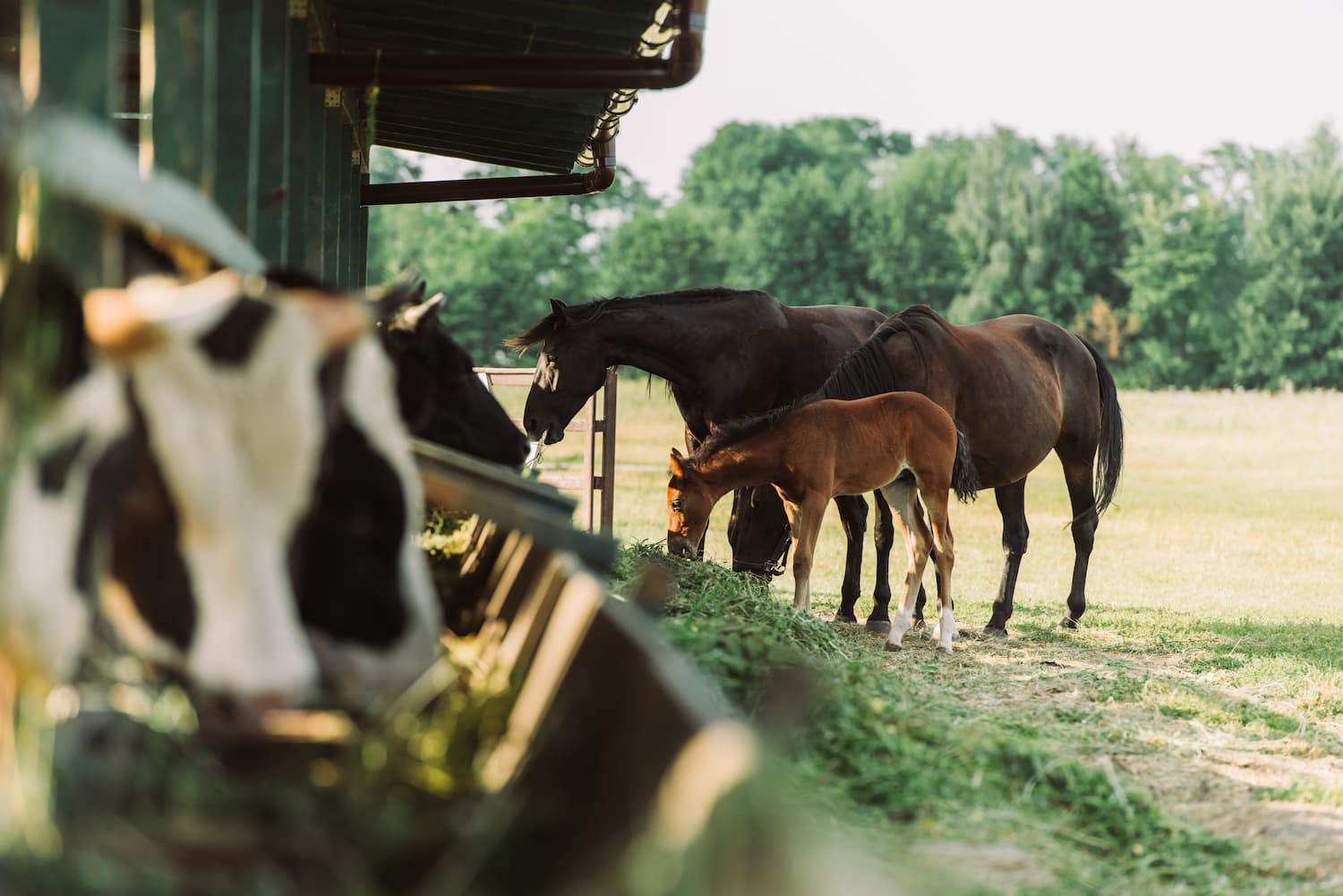
A busy barn often means caring for many different species in the same space. Horses may share a property with goats, cattle, poultry, or camelids. While this setup works well for daily farm life, it can create hidden risks when medications are involved. A treatment that is safe for one species can be dangerous for another.
Cross-species medication toxicity is a real concern for livestock owners. Giving the wrong medication, using the incorrect dose, or allowing another species access to a treated feed can lead to serious health problems. Working closely with an experienced large animal veterinarian helps ensure every animal on your property receives safe, appropriate care.
Tri-State Veterinary Services provides mobile large animal veterinary care throughout the CT, MA, and NY Tri-state area. Our veterinarian and veterinary team work with livestock producers and large animal owners to support safe medication use through science-based medicine and practical farm management guidance.
Why Cross-Species Medication Toxicity Happens
Different animal species process medications in very different ways. Their digestive systems, liver metabolism, and body size all influence how drugs affect them. A medication that works well for one species may be harmful to another.
Several factors contribute to cross-species toxicity in barns and farms:
- Each species absorbs and metabolizes medications differently
- Dosage requirements vary widely between animals
- Some medications are only approved for specific species
- Animals may accidentally access medications intended for others
For example, ionophores such as monensin are commonly added to cattle and poultry feed to improve feed efficiency and prevent coccidiosis. While safe for ruminants and poultry, monensin is extremely toxic to horses. According to research published by the Western College of Veterinary Medicine, the lethal dose for horses can be as low as 2 to 3 mg/kg of body weight, and exposure often results in fatal heart failure within hours. In 2024, approximately 70 horses died at an Oklahoma rodeo facility after ingesting feed contaminated with monensin, highlighting just how quickly cross-species contamination can turn deadly.
This is why consulting a large animal veterinarian before administering medications is so important for farm safety.
Common Medication Risks in Multi-Species Barns
Many farms store several types of medications at once. Without clear labeling and organization, mix-ups can occur more easily than expected.
Pain Medications and Anti-Inflammatories
Anti-inflammatory drugs are commonly used in large animals to treat injuries, lameness, or illness. While these medications can be very effective, they must be used carefully.
Phenylbutazone, one of the most widely used anti-inflammatories in horses, is a good example. While routine in equine medicine, it has a much narrower margin of safety in other species. Cattle treated with phenylbutazone can develop serious gastrointestinal and kidney complications, and its use in food-producing animals is heavily restricted by the FDA due to potential residue risks in the food supply.
Dewormers and Parasite Treatments
Parasite control is an important part of livestock management. However, dewormers are often species-specific.
Ivermectin is commonly used across multiple species, but dosing varies significantly. A dose that is appropriate for a horse can be dangerously high for a smaller animal such as a goat or young calf. Some avermectin-class dewormers can also cause toxicity in certain dog breeds that may be present on the farm, adding another layer of risk to medication storage and disposal.
Using the wrong product or dose may result in poor parasite control or potential toxicity. In barns with multiple species, animals may also consume feed or supplements that contain medications intended for another group.
Antibiotics
Antibiotics are powerful tools for treating infections in livestock. Some antibiotics are safe for certain species but dangerous for others because of how they affect the digestive system.
Oral antibiotics that are safe for cattle or swine can be fatal to horses and rabbits by disrupting the delicate balance of gut bacteria, leading to severe colitis or enterotoxemia. Research published in the journal Foods (2024) also highlights the broader concern of antibiotic residues in animal products when medications are used improperly across species, emphasizing the importance of correct species-specific prescribing and proper withdrawal times.
Improper use can disrupt the gut microbiome and lead to severe illness. Our veterinarians and team can help determine the correct medication and dosing plan based on the species and condition being treated.
Feed Contamination: A Hidden Danger
One of the most overlooked sources of cross-species toxicity is feed contamination. When a feed mill produces medicated cattle feed and then runs horse feed through the same equipment without thorough cleaning, trace amounts of medications like monensin can remain in the system.
The FDA has investigated multiple incidents of horse deaths linked to contaminated feed, including cases involving commercial feed suppliers. On mixed-species farms, the risk also exists when cattle and horses share feed storage areas or when livestock have unsupervised access to feed bins intended for other species.
Livestock owners should work with their feed suppliers to confirm that medicated and non-medicated feeds are processed separately, and always store feeds in clearly marked, species-specific containers.
Real Risks of Cross-Species Toxicity
Medication errors often happen with good intentions. A livestock owner may try to treat an animal quickly using a medication already available in the barn. Unfortunately, this can create serious risks.
Examples include:
- Giving horse medications to goats or sheep
- Using cattle medications in swine without veterinary guidance
- Poultry gaining access to medications intended for mammals
Possible symptoms of medication toxicity may include:
- Loss of appetite
- Diarrhea or digestive upset
- Weakness or neurological symptoms
- Organ damage in severe cases
Early veterinary intervention is important if an animal shows unusual symptoms after receiving medication.
Practical Steps to Prevent Medication Mix-Ups
Simple management strategies can significantly reduce the risk of cross-species toxicity.
Consider implementing these barn safety practices:
- Clearly label all medications with the species they are intended for
- Store medications in separate containers or areas by species
- Keep dosing instructions and treatment records nearby
- Avoid sharing syringes or dosing equipment between animals
- Always consult a veterinarian before using medications off-label
Good organization and careful record keeping can prevent many common medication errors.
Safe Medication Management for Livestock Owners
Safe medication use begins with a strong working relationship between livestock owners and their veterinary team. Establishing a veterinary client patient relationship ensures that treatment decisions are based on accurate knowledge of the animals and their environment.
Our Tri-State Veterinary team can help livestock owners develop medication protocols, dosing plans, and treatment records for their farm. Monitoring animals closely after treatment also helps identify any problems early.
If there is ever uncertainty about a medication, dosage, or species safety, it is always best to contact a veterinary professional before proceeding.
How Tri-State Veterinary Services Supports Livestock Health
Tri-State Veterinary Services LLC is a mobile large animal veterinary practice serving the CT, MA, and NY tri-state area. Led by Dr. Lisa Dauten, our veterinary team provides skilled and reliable care for cattle, swine, equine, poultry, camelids, and small ruminants.
Our goal is to support livestock producers and large animal owners through science-based medicine, client education, and practical herd management strategies.
Services include:
- Farm visits for large animal medical care
- Medication guidance and treatment planning
- Herd and flock health support
- Preventive care and disease management
Tri-State Veterinary Services is currently accepting new clients. Livestock owners can complete the new client application here.
Veterinarian-approved medications and supplies are also available through our online store.
Protecting Every Animal in Your Barn
Managing multiple species on a farm is rewarding, but it also requires careful attention to health and safety. Medication errors can happen quickly in busy barns, especially when several animals require treatment at once.
By working with an experienced large animal veterinarian, livestock owners can reduce risks and ensure every animal receives the right medication at the right dose.
If you have questions about livestock medications or need veterinary care for your animals, contact Tri-State Veterinary Services in Litchfield, CT at (860) 459-0986. Our veterinarian and veterinary team are here to support the health and wellbeing of your entire herd or flock.
Image credit: Envato
Resources
• FDA Investigation: Horse Deaths Due to Contaminated Feed (Gilman Co-Op Creamery)
• Monensin Toxicity in Horses — Western College of Veterinary Medicine
• Monensin Poisoning in Horses: Causes, Symptoms and Prevention
• Veterinary Drug Residues in Food Products of Animal Origin — Foods Journal (2024)
• Drug Use in Food Animals: Benefits and Risks — National Academy of Sciences